
Facility Master Planning: Why it is Essential for School Districts
Why Every School District Needs a Facility Master Plan
In education, no two schools are exactly alike, even within the same district. One building may have a modern gym addition, updated security vestibules, and flexible learning spaces, while another still relies on aging mechanical systems, worn finishes, undersized classrooms, or technology infrastructure that was never designed for today’s instructional needs. These differences rarely happen by accident. They are often the result of decades of repairs, renovations, grants, bond projects, emergency fixes, and phased improvements completed one school year at a time.
That piecemeal approach is understandable. Schools do not have unlimited funding, and districts must make difficult decisions about what gets fixed first. A leaking roof, failing HVAC system, accessibility concern, or safety issue may take priority over long-term design consistency. A roof replacement alone may need to be divided into multiple phases because of budget limitations. By the time that work is complete, enrollment may have shifted, educational programs may have changed, and new code, safety, technology, or community needs may have emerged.
This is where a Facility Master Plan becomes essential. A Facility Master Plan gives school leaders a clear, data-informed roadmap for maintaining, improving, and transforming their buildings over time. It helps districts move from reacting to problems toward making strategic decisions that support students, teachers, staff, families, and the broader community.
What Is a Facility Master Plan?
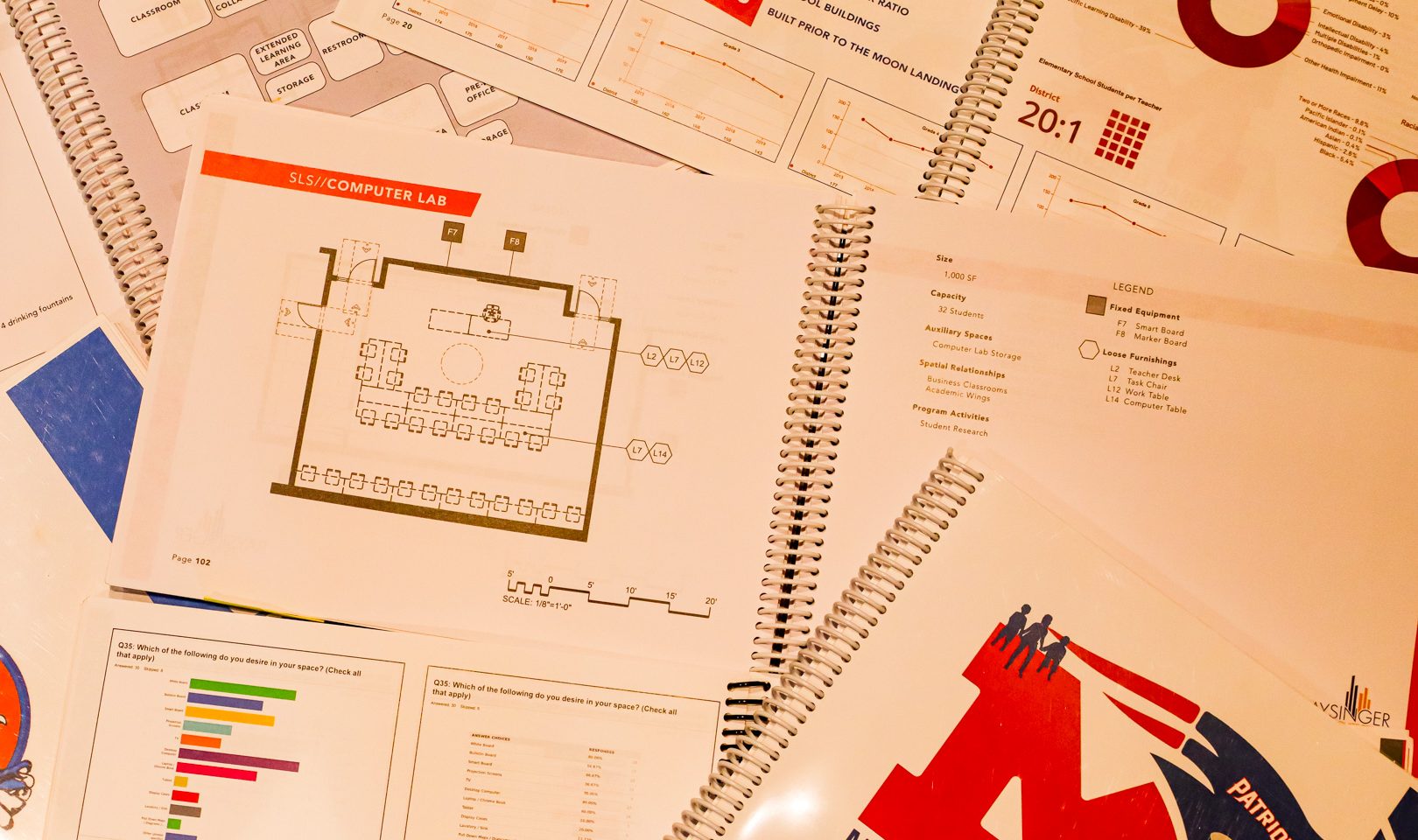
A Facility Master Plan is a living document developed through collaboration among district leadership, school boards, administrators, teachers, students, families, community members, architects, engineers, and facility professionals. It evaluates the current condition of a district’s buildings and sites, identifies future needs, prioritizes improvements, and outlines a practical strategy for capital investment.
At its best, a master plan is not simply a wish list of construction projects. It connects facilities to the district’s educational mission. It asks: How are students learning today? How might teaching and learning change over the next decade? Are buildings safe, accessible, efficient, healthy, and adaptable? Do they support career and technical education, special education, athletics, fine arts, technology, student services, and community use? Most importantly, do they support the teachers and staff who use these spaces every day?
Why Planning Matters Now
School buildings carry a tremendous responsibility. They are learning environments, workplaces, community anchors, emergency gathering spaces, and long-term public investments. According to the National Center for Education Statistics, the average age of the main instructional building in reporting U.S. public schools is 49 years, and 38 percent were built before 1970. The same data shows that 21 percent of public schools had major repair, renovation, or modernization work underway in December 2023.
Those numbers confirm what many district leaders already know: facilities are aging, needs are accumulating, and limited dollars must be used wisely. A master plan helps districts understand the full picture before committing to individual projects. Instead of asking only, “What needs to be fixed right now?” the district can ask, “What investments will create the greatest long-term value for our students and community?”
What a Strong Master Plan Should Include
A meaningful Facility Master Plan typically includes several key components:
- Facility condition assessments: A clear review of roofs, building envelopes, mechanical, electrical, plumbing, structural systems, interiors, site conditions, accessibility, safety, and code-related needs.
- Enrollment and program forecasting: An understanding of how student population, grade configurations, educational programs, and community growth may affect space needs.
- Stakeholder engagement: Input from teachers, staff, students, families, administrators, board members, and community partners to ensure the plan reflects real needs and shared priorities.
- Educational visioning: A discussion of how facilities can support modern instruction, collaboration, technology, career pathways, student wellness, and flexible learning environments.
- Prioritized recommendations: A phased list of projects organized by urgency, impact, cost, schedule, and funding strategy.
- Budget and funding alignment: Realistic cost planning that helps districts prepare for grants, bonds, state funding, capital reserves, partnerships, and future opportunities.
- Regular review and updates: A process for revisiting the plan so it remains relevant as district needs, costs, regulations, and community expectations change.
A Living Document, Not a One-Time Report
One of the most important things to understand about master planning is that the document is meant to evolve. No district is static. Enrollment changes. Communities grow or decline. Curriculum shifts. Safety expectations increase. Building codes are updated. Technology advances. Construction costs change. Funding opportunities appear with short application windows.
For that reason, districts should review their Facility Master Plan regularly. A brief annual or biennial check-in can help confirm priorities, while a more comprehensive update every five to ten years can account for larger changes in enrollment, facility conditions, educational delivery, and community goals. The goal is not to predict the future perfectly; the goal is to create a flexible framework that allows the district to respond intelligently when the future changes.
Why It Matters for Funding
A current master plan can make a district more prepared when funding becomes available. Grants, state programs, bond opportunities, and other sources of capital often come with deadlines. If a district already has documented needs, cost opinions, project priorities, and community support, it can move faster and make a stronger case for investment.
Without a plan, districts may be forced into reactive decisions. They may pursue the most visible project instead of the most urgent one, or they may miss funding opportunities because the necessary documentation is not ready. With a plan, leaders can point to a transparent process, explain why projects are prioritized, and show taxpayers how each investment fits into a larger strategy.
The Role of Architects and Engineers
Architects and engineers bring technical expertise to the planning process, but their role is not limited to drawing buildings. They help translate district goals into actionable facility strategies. They evaluate existing conditions, listen to stakeholders, identify risks, test options, estimate costs, and help districts understand how short-term repairs connect to long-term outcomes.
The best master planning processes are collaborative. They respect the knowledge of maintenance staff who know the buildings intimately, teachers who understand how spaces function during the school day, administrators who manage operations, students who experience the environment firsthand, and community members who fund and use the facilities. When those voices are included, the plan becomes more than a technical document. It becomes a shared vision.
Planning for Healthy, Adaptable Learning Environments
Facility planning is also about health, comfort, and student success. The U.S. Environmental Protection Agency notes that healthy school environments can affect the wellbeing and lifelong health of students and educators, and that healthier environments can reduce absenteeism, improve test scores, and support productivity. Issues such as indoor air quality, ventilation, water quality, lighting, acoustics, security, accessibility, and resilience should be part of the conversation—not afterthoughts.
A strong master plan helps districts think beyond today’s deficiencies and plan for tomorrow’s possibilities. That may include flexible classrooms, shared community spaces, improved athletic and arts facilities, career and technical education labs, outdoor learning areas, energy-efficient systems, safer circulation, or technology-ready infrastructure. The right plan allows districts to modernize with purpose rather than simply replace what is worn out.
The Bottom Line
Master Facility Planning gives school districts stability, clarity, and direction. It documents where facilities are today, where the district needs to go, and how to get there responsibly. It helps leaders prioritize limited resources, communicate with the community, prepare for funding opportunities, and create learning environments that serve students and staff well into the future.
For districts managing one building or twenty, the question is not whether facilities will continue to change. They will. The real question is whether that change will happen reactively, one emergency at a time, or strategically, with a plan that reflects the needs, values, and aspirations of the entire school community.
Sources
- National Center for Education Statistics, “Condition of Public School Facilities,” Fast Facts.
- National Center on School Infrastructure, “Master Planning.”
- National Center on School Infrastructure and 21st Century School Fund, “PK-12 Public Educational Facilities Master Plan Guide.”
- S. Environmental Protection Agency, “Creating a Healthy School Environment” and “Assess and Improve Your School Environment.”
- National Council on School Facilities, “Tools & Guides” and facility condition assessment resources.